Why the Klickitat River?
The Klickitat River is one of Washington’s most distinctive steelhead fisheries. As the longest undammed river in the state, it flows freely from the glaciers of Mt. Adams through deep canyons and remote desert landscapes before joining the Columbia. Unlike regulated rivers, the Klickitat is shaped almost entirely by weather, temperature, and natural flow cycles.
This is a river that rewards anglers who understand timing. Clarity can change dramatically throughout the day, especially in summer, as glacial melt increases with rising temperatures. Learning when to be on the water—and when to wait—is often the difference between a frustrating day and a memorable one. That variability is exactly what makes the Klickitat special, and why local knowledge matters so much here.
Klickitat River Steelhead & Salmon
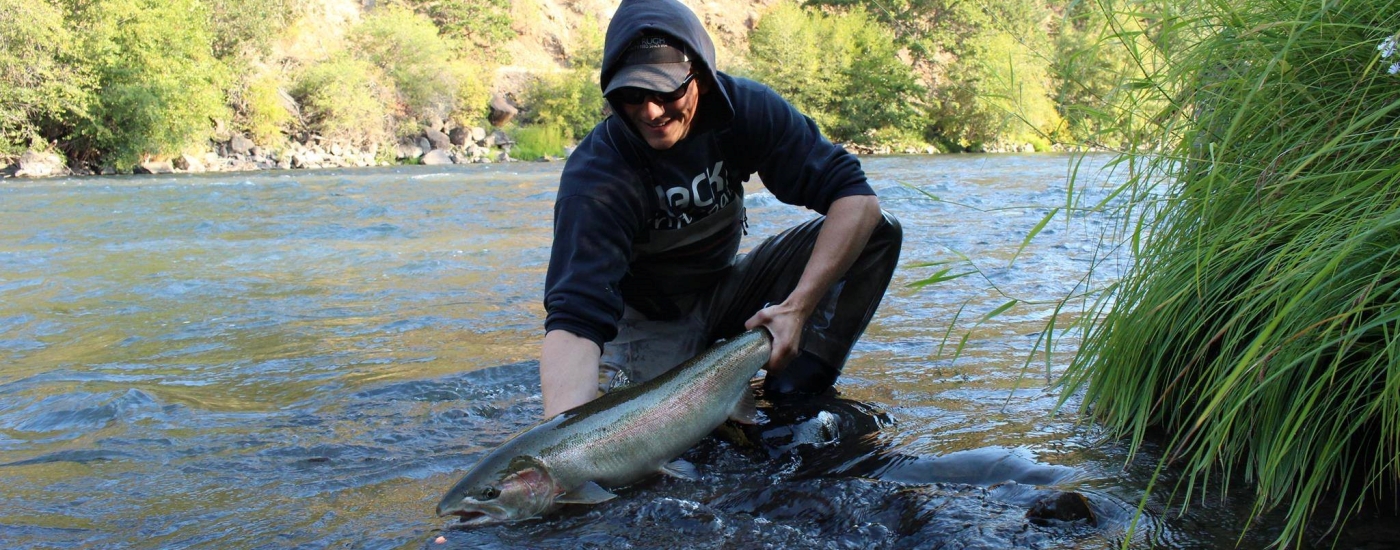
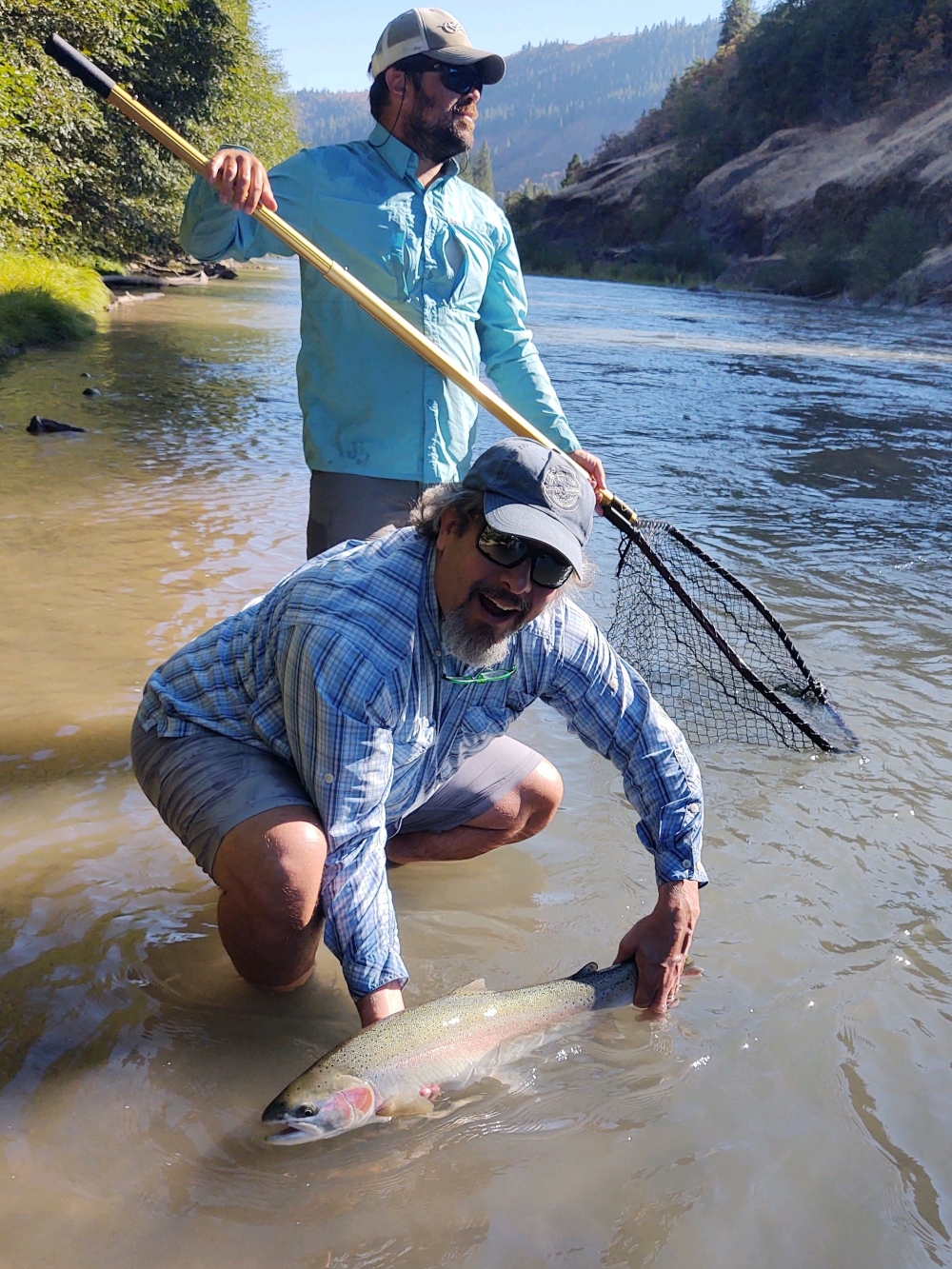
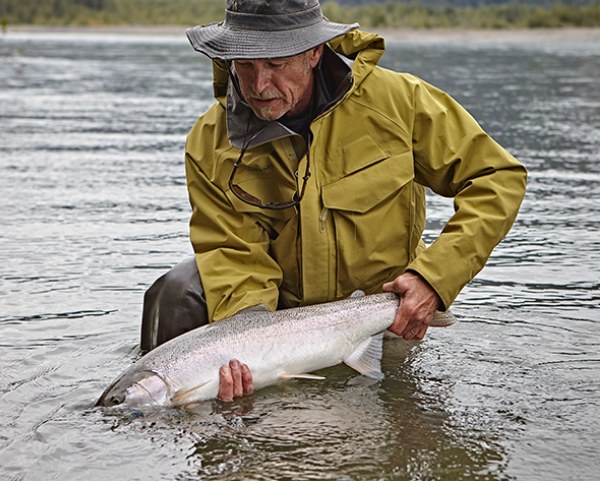
The Klickitat is primarily known for its summer and fall steelhead, with Chinook salmon also entering the system later in the season. These fish are powerful, aggressive, and unpredictable—everything steelhead anglers hope for.
Steelhead in the Klickitat are not numerous compared to some systems, but the fish that are present are strong, fresh, and willing to move. When you hook one, expect blistering runs, violent headshakes, and acrobatic jumps as the fish uses the full width and current of the river.
Chinook salmon begin to show later in the season as water temperatures cool, adding another dimension to the fishery and further reducing pressure as crowds thin out.
When to Fish the Klickitat River
The Klickitat fishes very differently throughout the season, largely because it is glacier-fed and weather-driven. Understanding how temperature and clarity interact is key.
Summer – Cycles, Solitude & Timing (June–August)
Early in the season, summer brings warm days and cold nights. Overnight cooling on Mt. Adams often allows the river to clear, while midday heat increases glacial melt and reduces visibility.
On these days, fishing first light is not always ideal. Clearer water frequently arrives mid-morning as the overnight cold water works its way downstream. It’s common to see visibility improve from a few inches to well over a foot during a single float, then decline again later in the day.
Pressure is light in summer, and anglers willing to time these clarity windows can have the river largely to themselves.
Early Fall – Cooling Temps & Fresh Fish (September)
As nights cool consistently, the Klickitat begins to stabilize. Glacial influence lessens, clarity improves, and both steelhead and Chinook salmon start pushing upriver in greater numbers.
September often provides the best balance of fish movement, clarity, and comfort, while crowds drop off as attention shifts to other fisheries. This is a prime month for anglers looking for classic steelhead conditions without heavy pressure.
Late Fall – Clear Water & Cold Mornings (October–November)
Late season brings colder nights and early mornings, sometimes with ice forming on rod guides. In exchange, the river often clears dramatically, reaching 4–5 feet of visibility when conditions settle.
Flows are still weather-dependent, and rain can quickly change things. Tributaries like the Big Muddy live up to their name and can blow the river out just as fast as summer heat. When the river is clear, however, late fall can offer some of the most visually rewarding and intense fishing of the season.
Techniques We Use on the Klickitat
The Klickitat is not a hatch-driven trout river. Success here comes from presentation, timing, and understanding steelhead behavior.
Steelhead Nymphing
Indicator nymphing is one of the most effective techniques on the Klickitat. We fish on a larger scale with heavier gear, typically using 7–8 weight fast-action rods. Slightly longer rods—often 9’6” to 10’—make mending easier in big, powerful water.
A stout reel with a reliable drag is critical. Steelhead are known for long, fast runs in every direction, and a quality machined reel prevents drag failure during extended fights. Indicator lines such as the Scientific Anglers Anadro or similar overweighted lines help transfer energy efficiently during mends and hook sets.
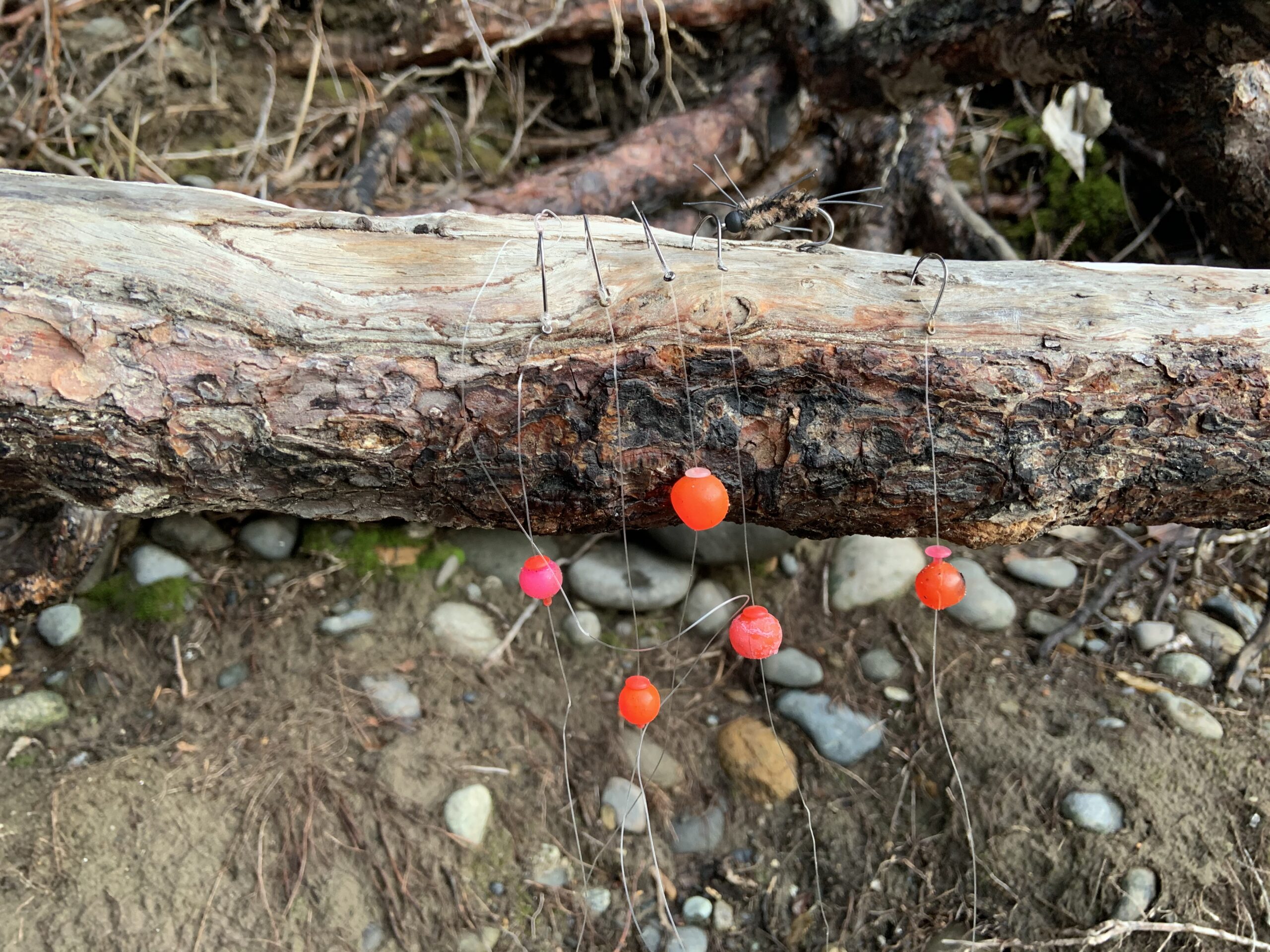
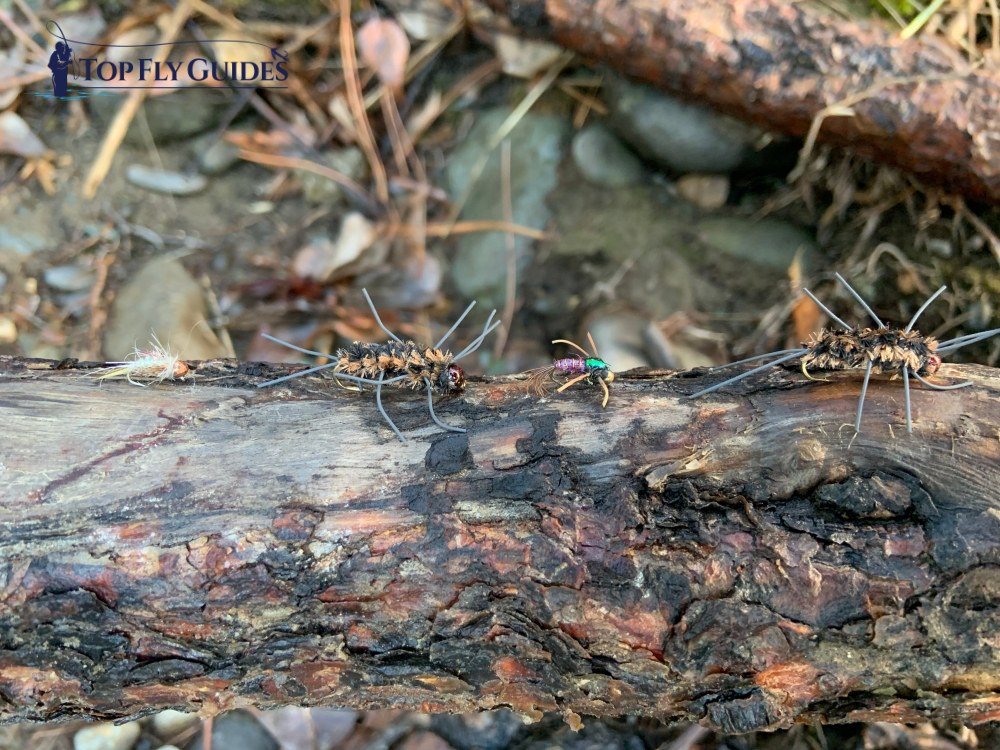
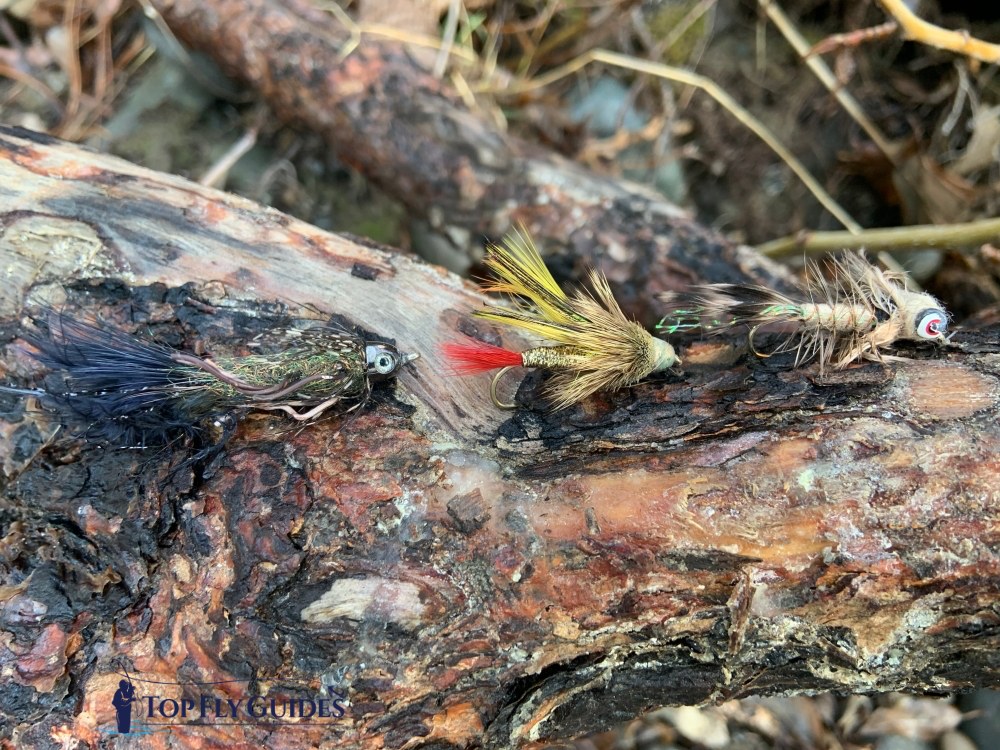
Leader setups vary with clarity. In clearer water, we use smaller beads and lighter fluorocarbon. As visibility drops, larger beads and heavier leader material become more effective. Stonefly patterns can also play a role when clarity is good or fish have seen less pressure.
Safety & River Awareness
The Klickitat is a powerful river with sections that are highly dangerous, even for experienced anglers. Some stretches are deceptively difficult to row, and mistakes can have serious consequences.
For anglers new to the river, this is not a place to experiment without preparation. Even the more forgiving sections demand respect, planning, and local knowledge. Guided trips remove much of that risk and allow you to focus on fishing rather than navigation and hazard management.
What’s Included
Every guided trip on the Klickitat River includes:
- Lunch on full-day trips
- Clean, well-maintained drift boat
- All required safety gear
- Quality rods, reels, flies, and terminal tackle
- Instruction tailored to your experience level
What You’ll Need to Bring
- Washington freshwater fishing license
- Weather-appropriate layers
- Hat, sunglasses, and sunscreen
- Water bottle and snacks
Klickitat River FAQ
Do I need a fishing license?
Yes. A valid Washington freshwater fishing license is required. Steelhead trips may also require a catch card depending on regulations.
Is the Klickitat good for beginners?
The fishing itself can be productive for beginners, but the river is not beginner-friendly from a safety standpoint. Guided trips are strongly recommended for those unfamiliar with the river.
Why don’t you always fish at first light?
Because the Klickitat is glacier-fed, clarity often improves later in the morning after overnight cooling. Timing your float around these cycles is critical.
What happens if the river is blown out?
If conditions are unsafe or unfishable, we’ll reschedule or provide a full refund if rescheduling isn’t possible.
Ready to Fish the Klickitat River?
If you’re looking for a true steelhead experience on a wild, undammed river—and you’re willing to fish smart, not just early—the Klickitat delivers. With the right timing and local knowledge, it offers solitude, challenge, and the chance to connect with some of the hardest-fighting fish in the Northwest.